CNBC reports 30% of American's seats earning half its revenue; Reuters reports American and United preparing further capacity cuts
Two reports on the same US carrier, published seven minutes apart on 16 September. One says the front of the plane now carries the airline; the other says there will be less flying. Neither mentions the other, and the only figure in either comes from the airline itself.
Two reports, one airline, seven minutes apart. CNBC published at 18:33 GMT on 16 September 2026, Reuters at 18:26. Both are a headline and a single line. Neither report we hold mentions the other's fact.
| CNBC | Reuters | |
|---|---|---|
| What it reports | 30% of American's seats drive half of its revenue | American and United preparing further capacity trims |
| Figure carried | 30% of seats, half of revenue | none |
| Source named | American Airlines, about itself | none |
| Hedged? | yes — "American says" | no — "prepare" stated flat |
| Cause given | "premium cabin rush", stated as fact | "fuel shock", stated as fact |
The airline is the only named source in either report. CNBC attributes its figure to American in both the headline and the line beneath it. Reuters names nobody for the plan to cut. Neither report says who checked anything, and no other report we hold carries either fact.
Nobody is in the cuts. In Reuters' line, fuel does the acting and the airlines prepare; fewer flights are called trims. No crew member, no ground worker and no passenger appears in either report.
What is not settled. We do not hold the period the 30% split covers, the fare paid for the other 70% of seats, the size of the capacity cuts, which routes they fall on or when they start. We hold no jobs figure. Both claims stand unverified: each reaches us through one outlet, and one of them is a company describing its own results.
This is a story about who an airline is now built for, and how much of it there will be.
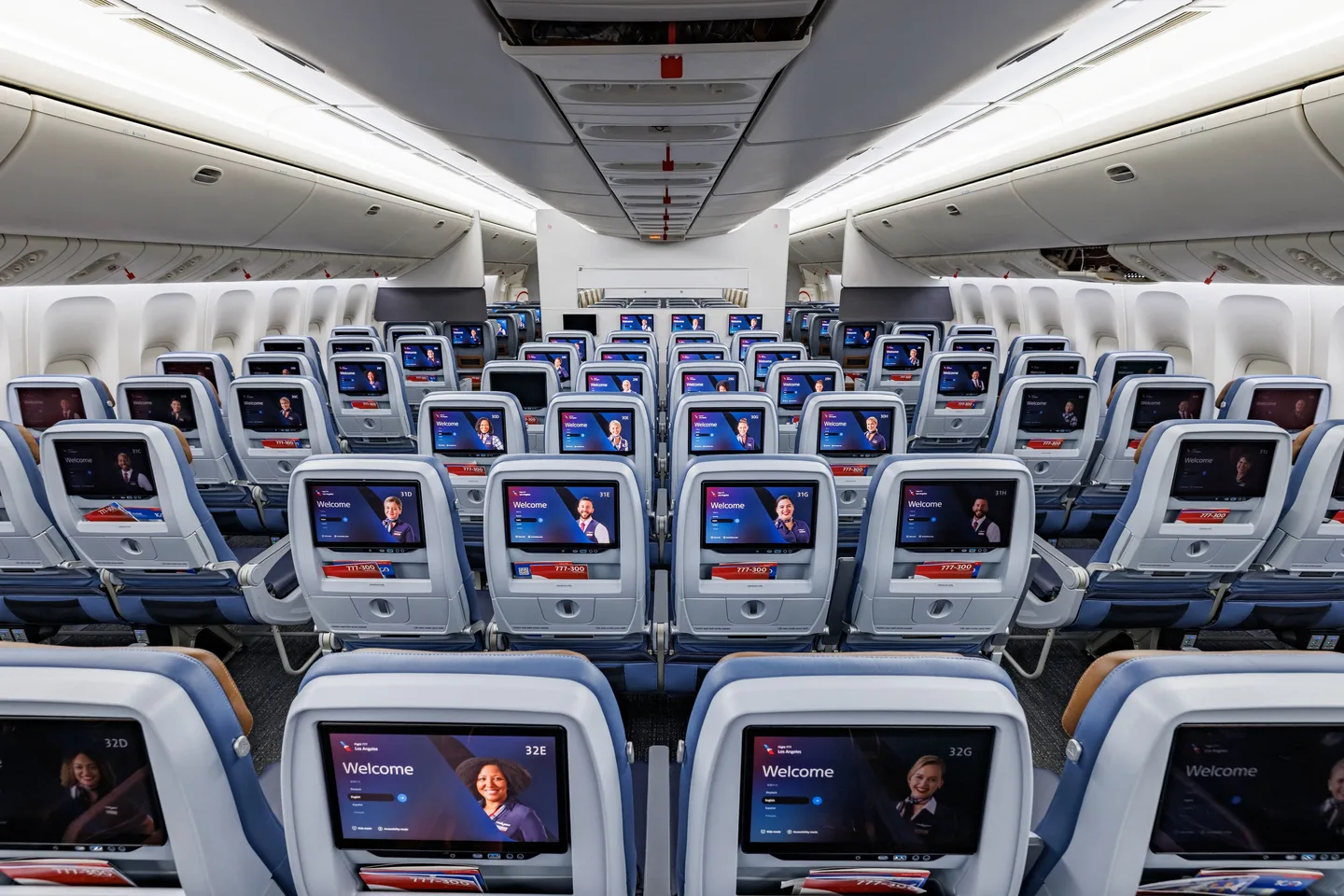
How it got here. US airlines have sold seats at many prices on the same flight since the industry was deregulated in 1978, and competition in the main cabin has been fought on fare ever since. The counterweight is the front of the aircraft: first, business and premium economy seats, sold at multiples of the cheapest fare, together with the paid loyalty and credit-card business built around them. American Airlines, based in Fort Worth, Texas, and United Airlines, based in Chicago, are two of the three largest US network carriers alongside Delta, and all three have spent years enlarging the cabins at the front. CNBC's report on 16 September 2026 is American putting a number on where that leaves its revenue.
The second report is about the other lever. Capacity is the flying an airline schedules — how many seats, over how many miles — and it is planned months ahead. Jet fuel is among the largest costs of running an airline, and carriers buy it at prices they do not set. When fuel rises, cutting capacity is a standard response: fewer seats in the market hold fares up. Reuters reports American and United preparing further such cuts, and attributes the pressure to fuel.
Who is in it. The two carriers; the passengers who buy the cheap seats and the ones who buy the expensive ones; the crews and ground staff whose rosters follow the schedule. None of that last group appears in either report.
What is at stake. If a minority of seats earns half the money, the aircraft, the schedule and the investment follow that minority. If capacity is cut, there is less flying to go round — and the reports do not say which seats, which routes or whose jobs go first.
Where it stands. As of 16 September 2026 we hold two short reports, both published that afternoon, and nothing that checks either.
What is being argued about
- Whether American Airlines is a growing business or a shrinking one, on the same afternoon
- A company's own figure about its own revenue, carried by one outlet
- Capacity cuts with no size, no route, no date and no worker in them
- Who pays for the other 70% of the seats, which neither report says
| Outlet | What it said | Figure carried | Source named | Hedged? |
|---|---|---|---|---|
| CNBC | 30% of American's seats drive half of revenue as the premium cabin rush heats up | 30% of seats, half of revenue | American Airlines, about itself | Yes — "American says" |
| Reuters | American and United prepare further capacity trims as a fuel shock reshapes flying | None | None | No — stated flat |
 CNBC
CNBC
🇺🇸US ·
TV/radio · independent
 American Airlines says 30% of seats drive half of revenue as premium cabin rush heats up
Open this report in The AI Times →
Read it at CNBC →
What we have measured
Accepted term 'refund' used without quotation marks ×1Asserted versus attributed gives the motive as fact, not as Trump's stated reason ×1Attackers named as proxies the attackers are named only through their backer, Iran ×1Attacks named but not counted The report names the attackers. 'Escalating' comes with no count of attacks or damage. ×1
Outlet profile in The AI Times →
 Reuters
🇺🇸US ·
wire · independent
 American, United prepare further capacity trims as fuel shock reshapes flying
Open this report in The AI Times →
Read it at Reuters →
What we have measured
Actor named The attacker is the subject of an active verb for both the deaths and the damage ×1Actor named No actor named for who cancelled the flights ×1Agreement stated flat, source in a tail attribution moved after the dash ×1Announcement written as settled A social-media post becomes a future indicative: the conversion will happen ×1
Outlet profile in The AI Times →
- Wed 16 Sep 202618:26 published time carried by the report Reuters reports American and United preparing further capacity trims, attributing the pressure to fuel no size givenNo source is named, and no route or date is given.
- Wed 16 Sep 202618:33 published time carried by the report CNBC reports American saying a minority of its seats accounts for half of its revenue 30% of seats, half of revenueThe figure comes from the airline about itself; no period is given.
Reuters
Reuters
🇺🇸US ·
wire · independent
American, United prepare further capacity trims as fuel shock reshapes flying
Open this report in The AI Times →
Read it at Reuters →
What we have measured
Actor named The attacker is the subject of an active verb for both the deaths and the damage ×1Actor named No actor named for who cancelled the flights ×1Agreement stated flat, source in a tail attribution moved after the dash ×1Announcement written as settled A social-media post becomes a future indicative: the conversion will happen ×1
Outlet profile in The AI Times →
CNBC
CNBC
🇺🇸US ·
TV/radio · independent
American Airlines says 30% of seats drive half of revenue as premium cabin rush heats up
Open this report in The AI Times →
Read it at CNBC →
What we have measured
Accepted term 'refund' used without quotation marks ×1Asserted versus attributed gives the motive as fact, not as Trump's stated reason ×1Attackers named as proxies the attackers are named only through their backer, Iran ×1Attacks named but not counted The report names the attackers. 'Escalating' comes with no count of attacks or damage. ×1
Outlet profile in The AI Times →
A company's number, in the company's words
Both reports we hold are short, and the only figure in either — 30% of seats, half the revenue — comes from the airline and is marked as coming from the airline. Neither report says who checked it, and neither gives the fare, the route or the period the split covers.
Cuts with nobody in them
The second report has fuel doing the acting and the airlines preparing trims; no crew member, no ground worker and no passenger appears in either report. Neither says how many flights or seats the trims remove.
CNBC
CNBC
🇺🇸US ·
TV/radio · independent
American Airlines says 30% of seats drive half of revenue as premium cabin rush heats up
Open this report in The AI Times →
Read it at CNBC →
What we have measured
Accepted term 'refund' used without quotation marks ×1Asserted versus attributed gives the motive as fact, not as Trump's stated reason ×1Attackers named as proxies the attackers are named only through their backer, Iran ×1Attacks named but not counted The report names the attackers. 'Escalating' comes with no count of attacks or damage. ×1
Outlet profile in The AI Times →
Reuters
Reuters
🇺🇸US ·
wire · independent
American, United prepare further capacity trims as fuel shock reshapes flying
Open this report in The AI Times →
Read it at Reuters →
What we have measured
Actor named The attacker is the subject of an active verb for both the deaths and the damage ×1Actor named No actor named for who cancelled the flights ×1Agreement stated flat, source in a tail attribution moved after the dash ×1Announcement written as settled A social-media post becomes a future indicative: the conversion will happen ×1
Outlet profile in The AI Times →
Claims and verdicts
Reuters
Reuters
🇺🇸US ·
wire · independent
American, United prepare further capacity trims as fuel shock reshapes flying
Open this report in The AI Times →
Read it at Reuters →
What we have measured
Actor named The attacker is the subject of an active verb for both the deaths and the damage ×1Actor named No actor named for who cancelled the flights ×1Agreement stated flat, source in a tail attribution moved after the dash ×1Announcement written as settled A social-media post becomes a future indicative: the conversion will happen ×1
Outlet profile in The AI Times →
CNBC
CNBC
🇺🇸US ·
TV/radio · independent
American Airlines says 30% of seats drive half of revenue as premium cabin rush heats up
Open this report in The AI Times →
Read it at CNBC →
What we have measured
Accepted term 'refund' used without quotation marks ×1Asserted versus attributed gives the motive as fact, not as Trump's stated reason ×1Attackers named as proxies the attackers are named only through their backer, Iran ×1Attacks named but not counted The report names the attackers. 'Escalating' comes with no count of attacks or damage. ×1
Outlet profile in The AI Times →
Who wrote it
Coverage, outlet by outlet
CNBC
CNBC
🇺🇸US ·
TV/radio · independent
American Airlines says 30% of seats drive half of revenue as premium cabin rush heats up
Open this report in The AI Times →
Read it at CNBC →
What we have measured
Accepted term 'refund' used without quotation marks ×1Asserted versus attributed gives the motive as fact, not as Trump's stated reason ×1Attackers named as proxies the attackers are named only through their backer, Iran ×1Attacks named but not counted The report names the attackers. 'Escalating' comes with no count of attacks or damage. ×1
Outlet profile in The AI Times →
— independent
Reuters
Reuters
🇺🇸US ·
wire · independent
American, United prepare further capacity trims as fuel shock reshapes flying
Open this report in The AI Times →
Read it at Reuters →
What we have measured
Actor named The attacker is the subject of an active verb for both the deaths and the damage ×1Actor named No actor named for who cancelled the flights ×1Agreement stated flat, source in a tail attribution moved after the dash ×1Announcement written as settled A social-media post becomes a future indicative: the conversion will happen ×1
Outlet profile in The AI Times →
— independent