LBCI says the Houthis struck Saudi oil facilities; IRNA says Ansarallah and Saudi Arabia clashed
Four reports on the same day, two names for one movement, and one with nobody named as attacking. None of the four names a facility that was hit.
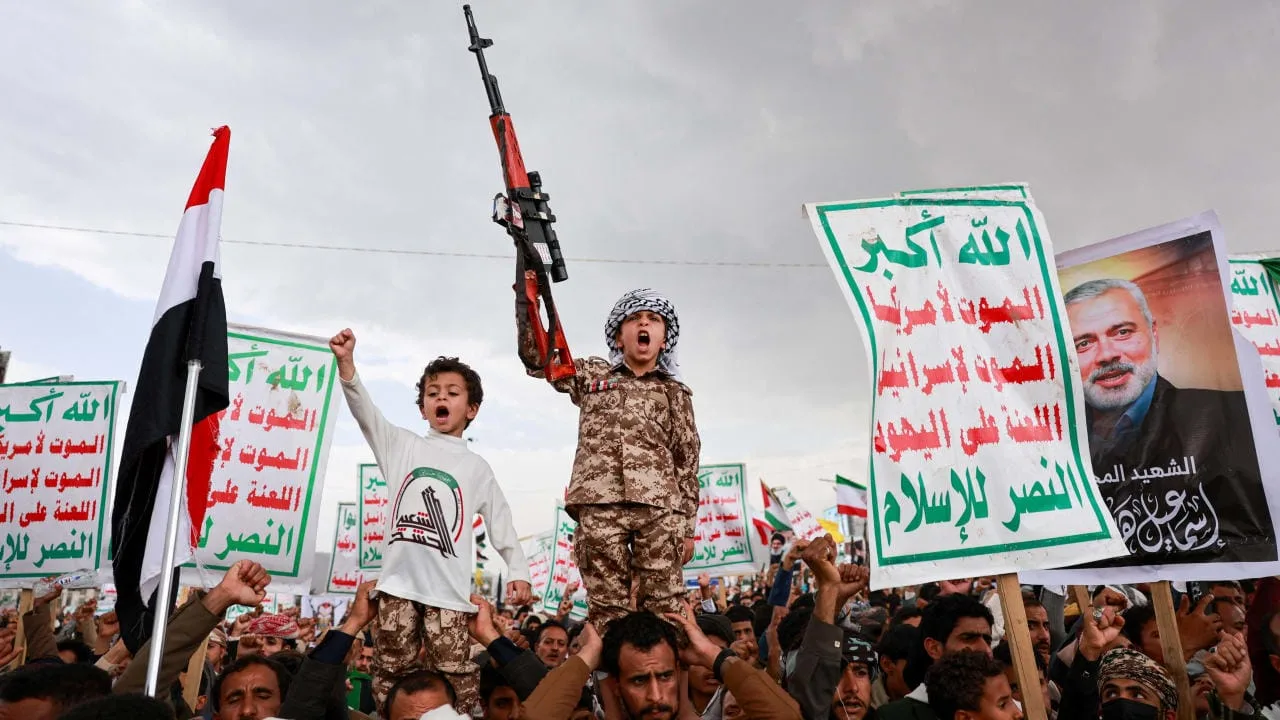
What we hold. Four reports, all published on 8 September 2026, all within 38 minutes of each other. Between them they describe attacks on Saudi oil facilities. They do not agree on who carried them out, or on what to call that party.
The names. Three call the movement the Houthis. One calls it Ansarallah, and that report is also the only one in which nobody is named as attacking.
| Outlet | Who is named as acting | How it is put |
|---|---|---|
| LBCI, on the UN | the Houthis | stated flat, inside the condemnation |
| LBCI, on Rubio | the Houthis, Iran behind them | Houthi authorship flat; "the Iranian hand" in quotation marks, put to Rubio |
| IRNA | nobody | "the clash between Ansarallah and Saudi Arabia" |
| The Jerusalem Post | Iran, through "its proxies" | stated flat, in the writer's own voice |
The UN, twice. LBCI has Secretary-General António Guterres condemning the attacks. IRNA, on the same UN response, quotes a spokesperson saying only that "the recent escalation of tensions is very worrying". No other report we hold carries either statement.
Not settled. None of the four names a facility hit, gives a date for the attacks, or reports damage, lost output or injuries. Nobody who works at the sites is quoted. That Iran was behind it rests on one sentence from US secretary of state Marco Rubio, in one report, with no evidence offered and no answer from Tehran.
What this is about. Attacks on oil facilities in Saudi Arabia, and a disagreement over who carried them out and what to call them.
How it got here. The movement at the centre of it calls itself Ansar Allah; outside Yemen it is usually called the Houthis, after the family that founded it. It seized Yemen's capital, Sanaa, in September 2014 and pushed out the internationally recognised government. In March 2015 Saudi Arabia assembled a coalition and began bombing to put that government back. The war that followed was fought partly across the Saudi border: the movement fired missiles and drones at Saudi airports, cities and oil installations, including the Abqaiq processing plant in September 2019 — an attack the Houthis claimed, and which Saudi Arabia and the United States blamed on Iran. Iran denied it. That dispute over authorship has never been settled, and it is the same dispute running through today's reports.
A United Nations-brokered truce in April 2022 largely stopped the cross-border fighting, and Saudi and Houthi negotiators have talked on and off since. Saudi Arabia and Iran restored diplomatic relations in March 2023, in a deal brokered by China. After the Gaza war began in October 2023, the movement attacked shipping in the Red Sea, saying it was acting over Gaza; the United States and Britain struck targets in Yemen in reply.
Who is in it. Saudi Arabia, whose territory and oil exports are the target. The Houthis, who govern Sanaa and most of northern Yemen. Iran, which the United States and Saudi Arabia say arms and directs the movement and which describes its support as political. The UN, which brokered the truce and runs the mediation. The United States, through its secretary of state.
What is at stake. Whether the 2022 truce survives, whether Saudi oil output and exports are disrupted, and whether Iran is held responsible in a way that pulls it in directly.
Where it stands. We do not hold reporting on what happened in Yemen or on the Saudi border in the weeks before these four reports, and the four say almost nothing about the attacks themselves.
What is being argued about
- Who is named as attacking Saudi oil facilities — and who is named as nothing at all
- Two names for one movement: the Houthis, or Ansarallah
- Whether Iran was behind it, and on whose word that rests
- What none of the four reports say: which facilities, what damage, whether anyone was hurt
| Outlet | Who is named as acting | What the movement is called | Hedged? |
|---|---|---|---|
| LBCI, on the UN condemnation | the Houthis | the Houthis | No — stated in the outlet's own voice: "the attacks the Houthis launched on oil facilities" |
| LBCI, on Rubio | the Houthis, with Iran behind them | the Houthis | Split — "the Iranian hand" is in quotation marks and put to Rubio; "attacks the Houthis launched" beside it is not hedged |
| IRNA | nobody | Ansarallah | No actor named — "the clash between Ansarallah and Saudi Arabia" |
| The Jerusalem Post | Iran, through "its proxies" | Iran's proxies | No — "a blockaded and weakened Iran may not be able to support its proxies as much", unattributed |
 LBCI (Lebanese Broadcasting Corporation International)
🇱🇧LB ·
TV/radio · independent
 الأمين العام للأمم المتحدة يندد بهجمات الحوثيين على السعودية
Open this report in The AI Times →
Read it at LBCI (Lebanese Broadcasting Corporation International) →
What we have measured
Active voice, actor named the Israeli army carried out the detonation ×1Actor framing Tehran calls the meeting. Iraq is the only other state named. ×1Actor left unnamed the strike in Iraqi waters has no one named as firing it — the source is "unknown" ×1Actor named names Israel as the one striking ×1
Outlet profile in The AI Times →
LBCI (Lebanese Broadcasting Corporation International)
LBCI (Lebanese Broadcasting Corporation International)
🇱🇧LB ·
TV/radio · independent
روبيو: "اليد الإيرانية" تقف خلف هجمات الحوثيين على السعودية
Open this report in The AI Times →
Read it at LBCI (Lebanese Broadcasting Corporation International) →
What we have measured
Active voice, actor named the Israeli army carried out the detonation ×1Actor framing Tehran calls the meeting. Iraq is the only other state named. ×1Actor left unnamed the strike in Iraqi waters has no one named as firing it — the source is "unknown" ×1Actor named names Israel as the one striking ×1
Outlet profile in The AI Times →
 واکنش سازمان ملل به تحولات جدید یمن و درگیری میان انصارالله و عربستان
Open this report in The AI Times →
Read it at IRNA (Islamic Republic News Agency) →
What we have measured
A contested word in the headline "illegal" is a Chinese spokesperson's characterisation, carried unmarked in the headline ×1A contested word taken as the report's own "illegal" appears in the headline without quotation marks or attribution to the speaker ×1Acted upon, never acting police are named as acting; whoever hoarded a billion toman of staples is not named at all ×1Actor label The Houthi-run authority is called Yemen's transport ministry. ×1
Outlet profile in The AI Times →
 The Jerusalem Post
🇮🇱IL ·
newspaper · independent
 Iran's 'last man standing': Will weakening Houthis put Iran's Middle East plans to bed? - analysis
Open this report in The AI Times →
Read it at The Jerusalem Post →
What we have measured
A count the body does not carry the headline says eight countries; the sentence names seven foreign ministers ×1Actor framing The Gulf ministers are the ones acting. Iran is the party they meet. ×1Actor generalised The headline has 'Baghdad' celebrating. The photo caption says the crowd is supporters of one armed group. ×1Actor named names the militias and calls the act 'desecration', in its own voice ×1
Outlet profile in The AI Times →
LBCI (Lebanese Broadcasting Corporation International)
LBCI (Lebanese Broadcasting Corporation International)
🇱🇧LB ·
TV/radio · independent
الأمين العام للأمم المتحدة يندد بهجمات الحوثيين على السعودية
Open this report in The AI Times →
Read it at LBCI (Lebanese Broadcasting Corporation International) →
What we have measured
Active voice, actor named the Israeli army carried out the detonation ×1Actor framing Tehran calls the meeting. Iraq is the only other state named. ×1Actor left unnamed the strike in Iraqi waters has no one named as firing it — the source is "unknown" ×1Actor named names Israel as the one striking ×1
Outlet profile in The AI Times →
LBCI (Lebanese Broadcasting Corporation International)
LBCI (Lebanese Broadcasting Corporation International)
🇱🇧LB ·
TV/radio · independent
روبيو: "اليد الإيرانية" تقف خلف هجمات الحوثيين على السعودية
Open this report in The AI Times →
Read it at LBCI (Lebanese Broadcasting Corporation International) →
What we have measured
Active voice, actor named the Israeli army carried out the detonation ×1Actor framing Tehran calls the meeting. Iraq is the only other state named. ×1Actor left unnamed the strike in Iraqi waters has no one named as firing it — the source is "unknown" ×1Actor named names Israel as the one striking ×1
Outlet profile in The AI Times →
واکنش سازمان ملل به تحولات جدید یمن و درگیری میان انصارالله و عربستان
Open this report in The AI Times →
Read it at IRNA (Islamic Republic News Agency) →
What we have measured
A contested word in the headline "illegal" is a Chinese spokesperson's characterisation, carried unmarked in the headline ×1A contested word taken as the report's own "illegal" appears in the headline without quotation marks or attribution to the speaker ×1Acted upon, never acting police are named as acting; whoever hoarded a billion toman of staples is not named at all ×1Actor label The Houthi-run authority is called Yemen's transport ministry. ×1
Outlet profile in The AI Times →
The Jerusalem Post
The Jerusalem Post
🇮🇱IL ·
newspaper · independent
Iran's 'last man standing': Will weakening Houthis put Iran's Middle East plans to bed? - analysis
Open this report in The AI Times →
Read it at The Jerusalem Post →
What we have measured
A count the body does not carry the headline says eight countries; the sentence names seven foreign ministers ×1Actor framing The Gulf ministers are the ones acting. Iran is the party they meet. ×1Actor generalised The headline has 'Baghdad' celebrating. The photo caption says the crowd is supporters of one armed group. ×1Actor named names the militias and calls the act 'desecration', in its own voice ×1
Outlet profile in The AI Times →
- Tue 8 Sep 202618:26 published time on the report LBCI reports UN Secretary-General António Guterres condemning "the attacks the Houthis launched on oil facilities" in Saudi Arabia
- Tue 8 Sep 202618:33 published time on the report LBCI reports US secretary of state Marco Rubio saying "the Iranian hand" is behind attacks the Houthis launched on Saudi Arabia
- Tue 8 Sep 202618:38 published time on the report IRNA reports a UN spokesperson on "the clash between Ansarallah and Saudi Arabia", saying "the recent escalation of tensions is very worrying". No attacker is named and no target is named
- Tue 8 Sep 202619:04 published time on the report The Jerusalem Post publishes an analysis asking whether a weakening Iran can still support "its proxies". It does not address these attacks
LBCI (Lebanese Broadcasting Corporation International)
LBCI (Lebanese Broadcasting Corporation International)
🇱🇧LB ·
TV/radio · independent
الأمين العام للأمم المتحدة يندد بهجمات الحوثيين على السعودية
Open this report in The AI Times →
Read it at LBCI (Lebanese Broadcasting Corporation International) →
What we have measured
Active voice, actor named the Israeli army carried out the detonation ×1Actor framing Tehran calls the meeting. Iraq is the only other state named. ×1Actor left unnamed the strike in Iraqi waters has no one named as firing it — the source is "unknown" ×1Actor named names Israel as the one striking ×1
Outlet profile in The AI Times →
LBCI (Lebanese Broadcasting Corporation International)
LBCI (Lebanese Broadcasting Corporation International)
🇱🇧LB ·
TV/radio · independent
روبيو: "اليد الإيرانية" تقف خلف هجمات الحوثيين على السعودية
Open this report in The AI Times →
Read it at LBCI (Lebanese Broadcasting Corporation International) →
What we have measured
Active voice, actor named the Israeli army carried out the detonation ×1Actor framing Tehran calls the meeting. Iraq is the only other state named. ×1Actor left unnamed the strike in Iraqi waters has no one named as firing it — the source is "unknown" ×1Actor named names Israel as the one striking ×1
Outlet profile in The AI Times →
واکنش سازمان ملل به تحولات جدید یمن و درگیری میان انصارالله و عربستان
Open this report in The AI Times →
Read it at IRNA (Islamic Republic News Agency) →
What we have measured
A contested word in the headline "illegal" is a Chinese spokesperson's characterisation, carried unmarked in the headline ×1A contested word taken as the report's own "illegal" appears in the headline without quotation marks or attribution to the speaker ×1Acted upon, never acting police are named as acting; whoever hoarded a billion toman of staples is not named at all ×1Actor label The Houthi-run authority is called Yemen's transport ministry. ×1
Outlet profile in The AI Times →
The Jerusalem Post
The Jerusalem Post
🇮🇱IL ·
newspaper · independent
Iran's 'last man standing': Will weakening Houthis put Iran's Middle East plans to bed? - analysis
Open this report in The AI Times →
Read it at The Jerusalem Post →
What we have measured
A count the body does not carry the headline says eight countries; the sentence names seven foreign ministers ×1Actor framing The Gulf ministers are the ones acting. Iran is the party they meet. ×1Actor generalised The headline has 'Baghdad' celebrating. The photo caption says the crowd is supporters of one armed group. ×1Actor named names the militias and calls the act 'desecration', in its own voice ×1
Outlet profile in The AI Times →
Three names for one group
Four reports, and the same actor is the Houthis, Ansarallah, or somebody's proxies. Only the report using the group's own name also frames the event as a clash between two sides rather than an attack by one. The Iranian role is a quoted claim in one report and the whole premise of another.
Nobody at the oil facilities
No report we hold names the facilities struck, gives a figure for damage, or says whether anyone was hurt. The word used for the sites is the plural "oil facilities" in every case. Nobody who works at them is quoted.
LBCI (Lebanese Broadcasting Corporation International)
LBCI (Lebanese Broadcasting Corporation International)
🇱🇧LB ·
TV/radio · independent
الأمين العام للأمم المتحدة يندد بهجمات الحوثيين على السعودية
Open this report in The AI Times →
Read it at LBCI (Lebanese Broadcasting Corporation International) →
What we have measured
Active voice, actor named the Israeli army carried out the detonation ×1Actor framing Tehran calls the meeting. Iraq is the only other state named. ×1Actor left unnamed the strike in Iraqi waters has no one named as firing it — the source is "unknown" ×1Actor named names Israel as the one striking ×1
Outlet profile in The AI Times →
LBCI (Lebanese Broadcasting Corporation International)
LBCI (Lebanese Broadcasting Corporation International)
🇱🇧LB ·
TV/radio · independent
روبيو: "اليد الإيرانية" تقف خلف هجمات الحوثيين على السعودية
Open this report in The AI Times →
Read it at LBCI (Lebanese Broadcasting Corporation International) →
What we have measured
Active voice, actor named the Israeli army carried out the detonation ×1Actor framing Tehran calls the meeting. Iraq is the only other state named. ×1Actor left unnamed the strike in Iraqi waters has no one named as firing it — the source is "unknown" ×1Actor named names Israel as the one striking ×1
Outlet profile in The AI Times →
واکنش سازمان ملل به تحولات جدید یمن و درگیری میان انصارالله و عربستان
Open this report in The AI Times →
Read it at IRNA (Islamic Republic News Agency) →
What we have measured
A contested word in the headline "illegal" is a Chinese spokesperson's characterisation, carried unmarked in the headline ×1A contested word taken as the report's own "illegal" appears in the headline without quotation marks or attribution to the speaker ×1Acted upon, never acting police are named as acting; whoever hoarded a billion toman of staples is not named at all ×1Actor label The Houthi-run authority is called Yemen's transport ministry. ×1
Outlet profile in The AI Times →
The Jerusalem Post
The Jerusalem Post
🇮🇱IL ·
newspaper · independent
Iran's 'last man standing': Will weakening Houthis put Iran's Middle East plans to bed? - analysis
Open this report in The AI Times →
Read it at The Jerusalem Post →
What we have measured
A count the body does not carry the headline says eight countries; the sentence names seven foreign ministers ×1Actor framing The Gulf ministers are the ones acting. Iran is the party they meet. ×1Actor generalised The headline has 'Baghdad' celebrating. The photo caption says the crowd is supporters of one armed group. ×1Actor named names the militias and calls the act 'desecration', in its own voice ×1
Outlet profile in The AI Times →
Claims and verdicts
LBCI (Lebanese Broadcasting Corporation International)
LBCI (Lebanese Broadcasting Corporation International)
🇱🇧LB ·
TV/radio · independent
روبيو: "اليد الإيرانية" تقف خلف هجمات الحوثيين على السعودية
Open this report in The AI Times →
Read it at LBCI (Lebanese Broadcasting Corporation International) →
What we have measured
Active voice, actor named the Israeli army carried out the detonation ×1Actor framing Tehran calls the meeting. Iraq is the only other state named. ×1Actor left unnamed the strike in Iraqi waters has no one named as firing it — the source is "unknown" ×1Actor named names Israel as the one striking ×1
Outlet profile in The AI Times →
The Jerusalem Post
The Jerusalem Post
🇮🇱IL ·
newspaper · independent
Iran's 'last man standing': Will weakening Houthis put Iran's Middle East plans to bed? - analysis
Open this report in The AI Times →
Read it at The Jerusalem Post →
What we have measured
A count the body does not carry the headline says eight countries; the sentence names seven foreign ministers ×1Actor framing The Gulf ministers are the ones acting. Iran is the party they meet. ×1Actor generalised The headline has 'Baghdad' celebrating. The photo caption says the crowd is supporters of one armed group. ×1Actor named names the militias and calls the act 'desecration', in its own voice ×1
Outlet profile in The AI Times →
LBCI (Lebanese Broadcasting Corporation International)
LBCI (Lebanese Broadcasting Corporation International)
🇱🇧LB ·
TV/radio · independent
الأمين العام للأمم المتحدة يندد بهجمات الحوثيين على السعودية
Open this report in The AI Times →
Read it at LBCI (Lebanese Broadcasting Corporation International) →
What we have measured
Active voice, actor named the Israeli army carried out the detonation ×1Actor framing Tehran calls the meeting. Iraq is the only other state named. ×1Actor left unnamed the strike in Iraqi waters has no one named as firing it — the source is "unknown" ×1Actor named names Israel as the one striking ×1
Outlet profile in The AI Times →
واکنش سازمان ملل به تحولات جدید یمن و درگیری میان انصارالله و عربستان
Open this report in The AI Times →
Read it at IRNA (Islamic Republic News Agency) →
What we have measured
A contested word in the headline "illegal" is a Chinese spokesperson's characterisation, carried unmarked in the headline ×1A contested word taken as the report's own "illegal" appears in the headline without quotation marks or attribution to the speaker ×1Acted upon, never acting police are named as acting; whoever hoarded a billion toman of staples is not named at all ×1Actor label The Houthi-run authority is called Yemen's transport ministry. ×1
Outlet profile in The AI Times →
LBCI (Lebanese Broadcasting Corporation International)
LBCI (Lebanese Broadcasting Corporation International)
🇱🇧LB ·
TV/radio · independent
الأمين العام للأمم المتحدة يندد بهجمات الحوثيين على السعودية
Open this report in The AI Times →
Read it at LBCI (Lebanese Broadcasting Corporation International) →
What we have measured
Active voice, actor named the Israeli army carried out the detonation ×1Actor framing Tehran calls the meeting. Iraq is the only other state named. ×1Actor left unnamed the strike in Iraqi waters has no one named as firing it — the source is "unknown" ×1Actor named names Israel as the one striking ×1
Outlet profile in The AI Times →
واکنش سازمان ملل به تحولات جدید یمن و درگیری میان انصارالله و عربستان
Open this report in The AI Times →
Read it at IRNA (Islamic Republic News Agency) →
What we have measured
A contested word in the headline "illegal" is a Chinese spokesperson's characterisation, carried unmarked in the headline ×1A contested word taken as the report's own "illegal" appears in the headline without quotation marks or attribution to the speaker ×1Acted upon, never acting police are named as acting; whoever hoarded a billion toman of staples is not named at all ×1Actor label The Houthi-run authority is called Yemen's transport ministry. ×1
Outlet profile in The AI Times →
Who wrote it
The Jerusalem Post
Coverage, outlet by outlet
The Jerusalem Post
The Jerusalem Post
🇮🇱IL ·
newspaper · independent
Iran's 'last man standing': Will weakening Houthis put Iran's Middle East plans to bed? - analysis
Open this report in The AI Times →
Read it at The Jerusalem Post →
What we have measured
A count the body does not carry the headline says eight countries; the sentence names seven foreign ministers ×1Actor framing The Gulf ministers are the ones acting. Iran is the party they meet. ×1Actor generalised The headline has 'Baghdad' celebrating. The photo caption says the crowd is supporters of one armed group. ×1Actor named names the militias and calls the act 'desecration', in its own voice ×1
Outlet profile in The AI Times →
— independent
واکنش سازمان ملل به تحولات جدید یمن و درگیری میان انصارالله و عربستان
Open this report in The AI Times →
Read it at IRNA (Islamic Republic News Agency) →
What we have measured
A contested word in the headline "illegal" is a Chinese spokesperson's characterisation, carried unmarked in the headline ×1A contested word taken as the report's own "illegal" appears in the headline without quotation marks or attribution to the speaker ×1Acted upon, never acting police are named as acting; whoever hoarded a billion toman of staples is not named at all ×1Actor label The Houthi-run authority is called Yemen's transport ministry. ×1
Outlet profile in The AI Times →
— state-controlled
LBCI (Lebanese Broadcasting Corporation International)
LBCI (Lebanese Broadcasting Corporation International)
🇱🇧LB ·
TV/radio · independent
روبيو: "اليد الإيرانية" تقف خلف هجمات الحوثيين على السعودية
Open this report in The AI Times →
Read it at LBCI (Lebanese Broadcasting Corporation International) →
What we have measured
Active voice, actor named the Israeli army carried out the detonation ×1Actor framing Tehran calls the meeting. Iraq is the only other state named. ×1Actor left unnamed the strike in Iraqi waters has no one named as firing it — the source is "unknown" ×1Actor named names Israel as the one striking ×1
Outlet profile in The AI Times →
— independent
LBCI (Lebanese Broadcasting Corporation International)
LBCI (Lebanese Broadcasting Corporation International)
🇱🇧LB ·
TV/radio · independent
الأمين العام للأمم المتحدة يندد بهجمات الحوثيين على السعودية
Open this report in The AI Times →
Read it at LBCI (Lebanese Broadcasting Corporation International) →
What we have measured
Active voice, actor named the Israeli army carried out the detonation ×1Actor framing Tehran calls the meeting. Iraq is the only other state named. ×1Actor left unnamed the strike in Iraqi waters has no one named as firing it — the source is "unknown" ×1Actor named names Israel as the one striking ×1
Outlet profile in The AI Times →
— independent