National Review says Boulder's climate case has 'finally' reached 'the right court'; The Times says billions in oil liability ride on it
The Supreme Court is taking up Boulder's state-law climate suit against oil companies. Four reports describe the case in three ways. One says the question is which court decides. Two say it is whether the industry pays. One says it is the companies' request.
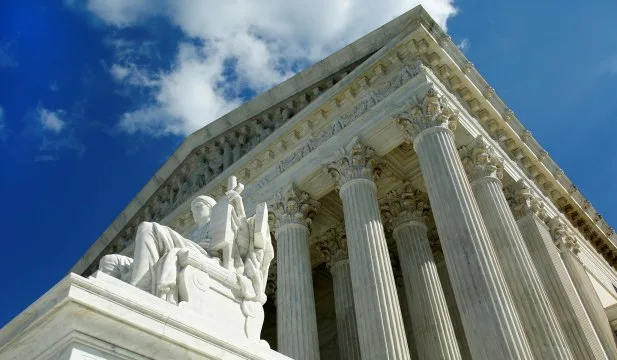
The case. The justices will hear Boulder's climate suit against oil companies, brought under state law. National Review names the case Suncor. We hold only the opening lines of each report.
Four reports, three framings.
| Outlet | What the case is | In whose voice |
|---|---|---|
| National Review | An issue "only it can handle", now at "the Right Court" | The outlet's own |
| The Washington Post | "Should Big Oil pay for climate change?" | Boulder's hope, attributed |
| The New York Times | Whether the industry faces "billions of dollars in liability" | The outlet's own |
| Reuters | The court weighs "the oil companies' request" against the suit | Headline only |
The venue. National Review says in its own voice that the Supreme Court is the right forum. It gives no source for that view.
The money. The Times puts the stakes at "billions". The Post gives "billions" only as the size of the tobacco and opioid cases Boulder hopes to match. The Times also says flatly that global warming caused the damages. Whether the companies are liable for them is the open question.
Who brought it. Only Reuters' headline says the companies asked the court to act. No other report we hold says who petitioned.
Not settled - Which legal question the justices agreed to answer. None of the four reports quotes it. - When the court hears arguments. No report we hold gives a date. - How much Boulder is actually claiming. No report gives a figure.
What this is about. Whether a US city can sue oil companies under its own state's law for the local costs of climate change, or whether that question belongs to federal law and federal courts.
How it got here. In 2018 the City of Boulder and Boulder County, in Colorado, sued two oil companies, Suncor Energy and ExxonMobil, in a Colorado state court. They argued under Colorado law that the companies sold fossil fuels while knowing the climate harm they would cause. They asked the companies to pay towards the cost of adapting to that harm.
The companies have argued from the start that the case does not belong there. Their position is that emissions cross state and national borders, so only federal law can govern them. In 2011 the Supreme Court held, in American Electric Power v. Connecticut, that the federal Clean Air Act displaces federal common-law nuisance suits over emissions. That ruling did not settle whether suits under state law survive. For years the fight was over which court should hear Boulder's case at all. The case went back to state court, and the Colorado courts let it go ahead. Now the US Supreme Court is taking it up.
The actors. - Boulder is one of many US cities, counties and states that have brought suits of this kind. It wants the companies to share the cost of climate damage. - Suncor and ExxonMobil want the suit ended. They argue that a state court applying state law should not rule on global emissions. - The Supreme Court has the final word on federal law, including whether federal law overrides a state's law.
What is at stake. If the justices let the suit go ahead, similar cases elsewhere may go forward too. The New York Times puts the industry's possible exposure at "billions of dollars". If the justices rule that federal law displaces these claims, suits of this kind may be closed off in state courts.
Where it stands. The case is before the justices. None of the reports we hold gives a date for arguments.
What is being argued about
- Whether state courts can hear climate damage suits against oil companies
- Whether the Supreme Court is the right forum, as National Review argues
- Whether the oil industry faces billions in liability
- Who brought the case to the justices
| Outlet | What the case is about | Hedged or stated flat? |
|---|---|---|
| National Review | "The Question of Emissions Liability Finally Heads to the Right Court" | Stated flat, in the outlet's voice |
| The Washington Post | "Should Big Oil pay for climate change?" Boulder hopes for a result like the tobacco and opioid cases | Attributed to Boulder |
| The New York Times | Whether the industry faces "billions of dollars in liability for damages caused by global warming" | Liability hedged with "could"; the cause of the damage stated flat |
| Reuters | The Supreme Court "weighs the oil companies' request against a climate-related suit" | Headline only |
 National Review
🇺🇸US ·
magazine · independent
 The Question of Emissions Liability Finally Heads to the Right Court
Open this report in The AI Times →
Read it at National Review →
What we have measured
Asserted not attributed Doubt about the allegation is stated flat, in the outlet's own voice ×1Asserted not attributed An argument about deterrence is stated as fact ×1Asserted versus attributed calls it an abuse of power in its own voice ×1Asserted versus attributed 'Abuse of presidential power' is stated flat ×1
Outlet profile in The AI Times →
T
The Washington Post
 Should Big Oil pay for climate change? A Supreme Court case will help decide.
Open this report in The AI Times →
Read it at The Washington Post →
What we have measured
Accused's denial carried the only report carrying the Marine's side ×1Actor named via accusation the administration is named as acting, through the ranchers' charge; the price rise is stated flat ×1Asserted, not attributed a shift of power to Iran stated flat in the headline ×1Asserted or attributed the headline states as data what the body shows the chair selecting in a speech ×1
Outlet profile in The AI Times →
 The New York Times
🇺🇸US ·
newspaper · independent
 A Supreme Court Battle Over Climate Change Begins
Open this report in The AI Times →
Read it at The New York Times →
What we have measured
Active and passive voice the ship is 'targeted' with no actor, one sentence before a named actor is given for the Saudi attack ×1Active vs passive voice Pike is named as the killer in the active voice; the botched execution has no actor named ×1Actor label Names the shooter by its backer, not by its own name. ×1Actor named Names the official and what the process did to Pike. ×1
Outlet profile in The AI Times →
 Reuters
🇺🇸US ·
wire · independent
 Suprema Corte dos EUA avalia pedido de petroleiras contra ação relacionada a clima
Open this report in The AI Times →
Read it at Reuters →
What we have measured
Actor named The attacker is the subject of an active verb for both the deaths and the damage ×1Actor named No actor named for who cancelled the flights ×1Agreement stated flat, source in a tail attribution moved after the dash ×1Announcement written as settled A social-media post becomes a future indicative: the conversion will happen ×1
Outlet profile in The AI Times →
National Review
National Review
🇺🇸US ·
magazine · independent
The Question of Emissions Liability Finally Heads to the Right Court
Open this report in The AI Times →
Read it at National Review →
What we have measured
Asserted not attributed Doubt about the allegation is stated flat, in the outlet's own voice ×1Asserted not attributed An argument about deterrence is stated as fact ×1Asserted versus attributed calls it an abuse of power in its own voice ×1Asserted versus attributed 'Abuse of presidential power' is stated flat ×1
Outlet profile in The AI Times →
T
The Washington Post
Should Big Oil pay for climate change? A Supreme Court case will help decide.
Open this report in The AI Times →
Read it at The Washington Post →
What we have measured
Accused's denial carried the only report carrying the Marine's side ×1Actor named via accusation the administration is named as acting, through the ranchers' charge; the price rise is stated flat ×1Asserted, not attributed a shift of power to Iran stated flat in the headline ×1Asserted or attributed the headline states as data what the body shows the chair selecting in a speech ×1
Outlet profile in The AI Times →
The New York Times
The New York Times
🇺🇸US ·
newspaper · independent
A Supreme Court Battle Over Climate Change Begins
Open this report in The AI Times →
Read it at The New York Times →
What we have measured
Active and passive voice the ship is 'targeted' with no actor, one sentence before a named actor is given for the Saudi attack ×1Active vs passive voice Pike is named as the killer in the active voice; the botched execution has no actor named ×1Actor label Names the shooter by its backer, not by its own name. ×1Actor named Names the official and what the process did to Pike. ×1
Outlet profile in The AI Times →
Reuters
Reuters
🇺🇸US ·
wire · independent
Suprema Corte dos EUA avalia pedido de petroleiras contra ação relacionada a clima
Open this report in The AI Times →
Read it at Reuters →
What we have measured
Actor named The attacker is the subject of an active verb for both the deaths and the damage ×1Actor named No actor named for who cancelled the flights ×1Agreement stated flat, source in a tail attribution moved after the dash ×1Announcement written as settled A social-media post becomes a future indicative: the conversion will happen ×1
Outlet profile in The AI Times →
Whose question the court is answering
Four reports describe the case in three ways. One says it is about liability. One says it is about which court should decide, and gives its answer in its own voice. One says the court is weighing the oil companies' request against the suit.
National Review
National Review
🇺🇸US ·
magazine · independent
The Question of Emissions Liability Finally Heads to the Right Court
Open this report in The AI Times →
Read it at National Review →
What we have measured
Asserted not attributed Doubt about the allegation is stated flat, in the outlet's own voice ×1Asserted not attributed An argument about deterrence is stated as fact ×1Asserted versus attributed calls it an abuse of power in its own voice ×1Asserted versus attributed 'Abuse of presidential power' is stated flat ×1
Outlet profile in The AI Times →
T
The Washington Post
Should Big Oil pay for climate change? A Supreme Court case will help decide.
Open this report in The AI Times →
Read it at The Washington Post →
What we have measured
Accused's denial carried the only report carrying the Marine's side ×1Actor named via accusation the administration is named as acting, through the ranchers' charge; the price rise is stated flat ×1Asserted, not attributed a shift of power to Iran stated flat in the headline ×1Asserted or attributed the headline states as data what the body shows the chair selecting in a speech ×1
Outlet profile in The AI Times →
The New York Times
The New York Times
🇺🇸US ·
newspaper · independent
A Supreme Court Battle Over Climate Change Begins
Open this report in The AI Times →
Read it at The New York Times →
What we have measured
Active and passive voice the ship is 'targeted' with no actor, one sentence before a named actor is given for the Saudi attack ×1Active vs passive voice Pike is named as the killer in the active voice; the botched execution has no actor named ×1Actor label Names the shooter by its backer, not by its own name. ×1Actor named Names the official and what the process did to Pike. ×1
Outlet profile in The AI Times →
Reuters
Reuters
🇺🇸US ·
wire · independent
Suprema Corte dos EUA avalia pedido de petroleiras contra ação relacionada a clima
Open this report in The AI Times →
Read it at Reuters →
What we have measured
Actor named The attacker is the subject of an active verb for both the deaths and the damage ×1Actor named No actor named for who cancelled the flights ×1Agreement stated flat, source in a tail attribution moved after the dash ×1Announcement written as settled A social-media post becomes a future indicative: the conversion will happen ×1
Outlet profile in The AI Times →
Claims and verdicts
No claims registered.
Who wrote it
The New York Times
National Review
Coverage, outlet by outlet
Reuters
Reuters
🇺🇸US ·
wire · independent
Suprema Corte dos EUA avalia pedido de petroleiras contra ação relacionada a clima
Open this report in The AI Times →
Read it at Reuters →
What we have measured
Actor named The attacker is the subject of an active verb for both the deaths and the damage ×1Actor named No actor named for who cancelled the flights ×1Agreement stated flat, source in a tail attribution moved after the dash ×1Announcement written as settled A social-media post becomes a future indicative: the conversion will happen ×1
Outlet profile in The AI Times →
— independent
The New York Times
The New York Times
🇺🇸US ·
newspaper · independent
A Supreme Court Battle Over Climate Change Begins
Open this report in The AI Times →
Read it at The New York Times →
What we have measured
Active and passive voice the ship is 'targeted' with no actor, one sentence before a named actor is given for the Saudi attack ×1Active vs passive voice Pike is named as the killer in the active voice; the botched execution has no actor named ×1Actor label Names the shooter by its backer, not by its own name. ×1Actor named Names the official and what the process did to Pike. ×1
Outlet profile in The AI Times →
— independent
National Review
National Review
🇺🇸US ·
magazine · independent
The Question of Emissions Liability Finally Heads to the Right Court
Open this report in The AI Times →
Read it at National Review →
What we have measured
Asserted not attributed Doubt about the allegation is stated flat, in the outlet's own voice ×1Asserted not attributed An argument about deterrence is stated as fact ×1Asserted versus attributed calls it an abuse of power in its own voice ×1Asserted versus attributed 'Abuse of presidential power' is stated flat ×1
Outlet profile in The AI Times →
— independent
Should Big Oil pay for climate change? A Supreme Court case will help decide.
Open this report in The AI Times →
Read it at The Washington Post →
What we have measured
Accused's denial carried the only report carrying the Marine's side ×1Actor named via accusation the administration is named as acting, through the ranchers' charge; the price rise is stated flat ×1Asserted, not attributed a shift of power to Iran stated flat in the headline ×1Asserted or attributed the headline states as data what the body shows the chair selecting in a speech ×1
Outlet profile in The AI Times →
— independent Mother Jones
🇺🇸US ·
magazine · independent
What we have measured
Asserted, not attributed 'ultra-gerrymandered' stated as fact ×1Asserted versus attributed 'Cover-up' is asserted in the report's own voice, not attributed ×1Asserted versus attributed calls it a cover-up in its own voice ×1Assertion vs attribution describes the operation as a 'violent occupation' in its own voice, with no source for the phrase ×1
Outlet profile in The AI Times →
N
NPR
 Fox News
🇺🇸US ·
TV/radio · independent
What we have measured
Accused named Names one former fraternity member through his lawyer's denial. The woman is anonymous by her own choice. ×1Actor in headline The headline names Trump as the one acting. The body names only Anduril. ×1A number, with no people named The only report that gives a figure counts the journalists whose communications were swept up. It names none of them. ×1Asserted, not attributed stated flat: past court defeats are asserted with no case, judge or date named ×1
Outlet profile in The AI Times →
 Breitbart
🇺🇸US ·
digital · independent
What we have measured
Anyone hurt is counted, not named eight deaths given as a number only ×1Framing of motive The lede calls the denial a punishment and puts 'fake news' in quotation marks; the officials being sued are left unnamed ×1How the person shot is named a status, not a name: the only report that never uses either name calls him an illegal alien ×1How the place is described a party label attached to the city in the same clause as the casualty count ×1
Outlet profile in The AI Times →
 MSNBC
MSNBC
🇺🇸US ·
TV/radio · independent
What we have measured
Accuser not named The lede does not name the senator making the accusation ×1Actor named for the ban The White House is the subject of both verbs: it blocked journalists, then let CNN back in. ×1A first stated flat a never-before claim carried without a source attached ×1Asserted, not attributed absence of fraud evidence stated as fact ×1
Outlet profile in The AI Times →
 The Hill
🇺🇸US ·
digital · independent
What we have measured
Accusation attributed the word lying is placed in a named politician's mouth, not the outlet's ×1Actor named No actor named for who kept reporters out ×1Actor named No actor named for who let reporters back in ×1Actor named Names the state as the one that carried out the execution. ×1
Outlet profile in The AI Times →
 The Wall Street Journal
🇺🇸US ·
newspaper · independent
What we have measured
Outlet profile in The AI Times →
 Associated Press
🇺🇸US ·
wire · independent
What we have measured
Dating and attribution Dates the signing to Aug. 6, 2026 and writes ord ×1Dating and attribution Carries a dateline correction, repeated three ti ×1How hard the claim is stated Marks "birth tourism" as the administration's ow ×1How hard the claim is stated high ×1
Outlet profile in The AI Times →