Le Figaro leads Pezeshkian on 'dangerous' pressure on Iran, IRNA on BRICS national currencies
Two reports on Iran's president, published five seconds apart on 11 September, lead on different things. Neither carries the other's point.
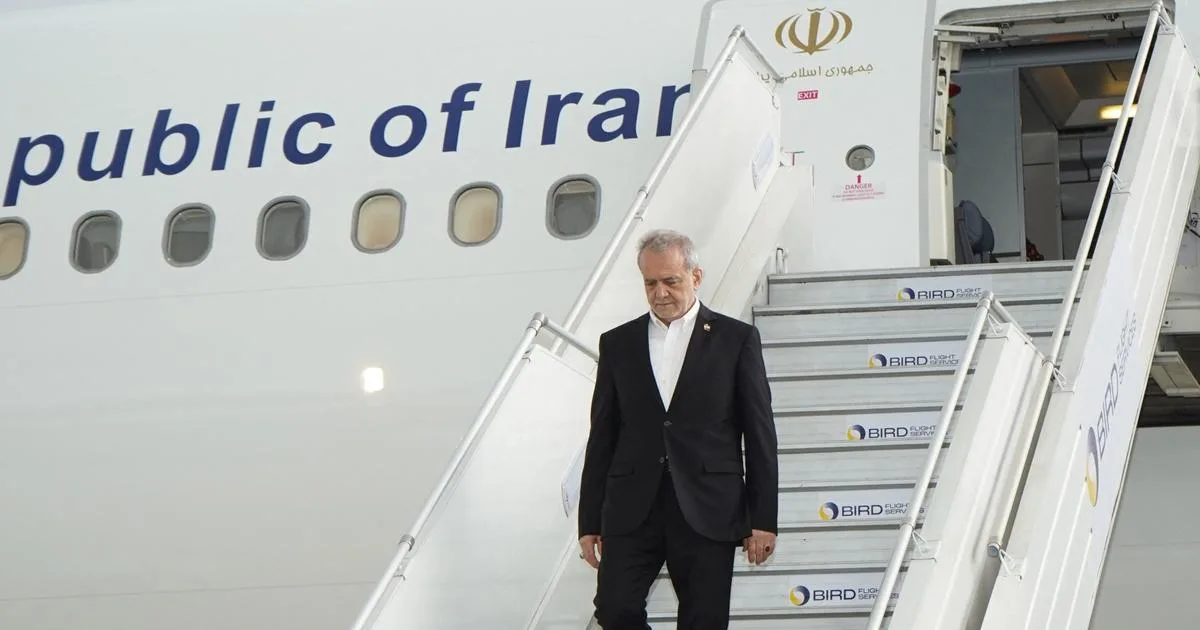
Two leads, one afternoon. Le Figaro and IRNA, Iran's state news agency, published reports on President Masoud Pezeshkian five seconds apart on 11 September. They lead on different things.
| Le Figaro | IRNA | |
|---|---|---|
| Lead | Pressure on Iran has "atteint un stade critique et dangereux" | Expand national currencies in trade between BRICS members |
| Filed under | "Guerre au Moyen-Orient" | — |
| Mentions BRICS | Not in the text we hold | Yes |
| Names who applies the pressure | No | Pressure not mentioned |
What Le Figaro quotes. Pezeshkian says that when a country faces "political and military pressure" on its trade, energy, infrastructure and financial system, the effects cross its borders. Le Figaro's text names no one as applying the pressure.
What IRNA quotes. IRNA says Pezeshkian called national currencies "one of the bloc's most essential priorities". It quotes no other voice on the proposal.
The meeting on the side. A second IRNA report cites a Chinese foreign ministry spokesperson: China's president and India's prime minister will meet at the 18th BRICS summit in New Delhi. Beijing expects the meeting to help manage "differences" between the two countries. It does not say what they are. Le Figaro's text does not mention the meeting.
What is not settled - Whether both reports quote the same speech. Le Figaro's text does not say where he spoke. - Whether he gave the warning at the summit. IRNA's report of his BRICS remarks does not include it. - Each claim rests on one outlet, and we hold only the opening lines of each report. - No Indian outlet we hold confirms the China–India meeting.
What this is about. Iran's president, Masoud Pezeshkian, speaking on 11 September: one report has him warning about the pressure on Iran, the other has him asking the BRICS countries to trade in one another's currencies. The two subjects are one subject. The pressure is largely financial, and BRICS is where Iran looks for room around it.
How it got here. Iran's nuclear programme has been bargained over for two decades. The 2015 agreement between Iran and six powers — the United States, Britain, France, Germany, Russia and China — lifted United Nations and Western sanctions in return for limits on that programme. The United States withdrew in 2018, under President Trump, and reimposed its own measures. Those measures reach far past American borders, because most cross-border payment clears in dollars: a bank anywhere can be cut off from the American financial system for handling Iranian money. Pezeshkian was elected in July 2024, after President Ebrahim Raisi died in a helicopter crash. Iran joined BRICS — founded by Brazil, Russia, India and China, later joined by South Africa and others — at the start of 2024. Settling trade in national currencies rather than dollars is an old BRICS argument; for Iran it is a sanctions argument.
Earlier this month we found outlets divided over what to call the confrontation between Iran and the United States, with Trump reported as denying it is a war. We reported disputed accounts of traffic and strikes in the Strait of Hormuz, the channel that carries Gulf oil out to sea; a US Treasury designation of a firm it says moved money for the Revolutionary Guard; Türkiye saying it was working to end the fighting; and, on 10 September, Iran's file going to the UN Security Council, the one body that can order sanctions binding on every state.
What is at stake. If BRICS members settle more of their trade outside the dollar, sanctions bite less. If the Security Council route runs, Iran faces restrictions its partners cannot lawfully ignore.
Where it stands. The bloc's 18th summit is in New Delhi. China's foreign ministry says its president and India's prime minister will meet there.
The story so far
- An-Nahar: the file goes to the Security Council. Shargh: an "anti-Iranian resolution" · 10 Sep 2026
- Trump says 30 ships a night through Hormuz; Iran's Rezaei says five or six, and struck · 8 Sep 2026
- Al-Monitor writes 'the Iran war'. Gulf News writes 'Iran conflict' and says Trump denies it is one. · 5 Sep 2026
- Anadolu says Erdoğan told the UAE that Türkiye is working to end the Iran-US war. Gulf News and Shargh report a call about the region. · 5 Sep 2026
- Treasury says Golden Global moved money for the Revolutionary Guard. An-Nahar says on suspicion, IRNA says under a pretext. · 5 Sep 2026
Earlier stories The AI Times filed on this thread.
What is being argued about
- Le Figaro: Pezeshkian says pressure on Iran is "critical and dangerous"
- IRNA: Pezeshkian ranks national currencies in BRICS trade as a top priority
- IRNA, citing Beijing: China's and India's leaders to meet at the New Delhi summit
- Neither report on Pezeshkian names who applies the pressure
| Outlet | What it leads on | What it leaves out |
|---|---|---|
| Pressure on Iran has "atteint un stade critique et dangereux". Filed under "Guerre au Moyen-Orient" | No mention of BRICS or of national currencies in the text we hold | Le Figaro |
| Pezeshkian calls national currencies "one of the bloc's most essential priorities" | No mention of the warning about pressure in the text we hold | IRNA |
 Le Figaro
🇫🇷FR ·
newspaper · independent
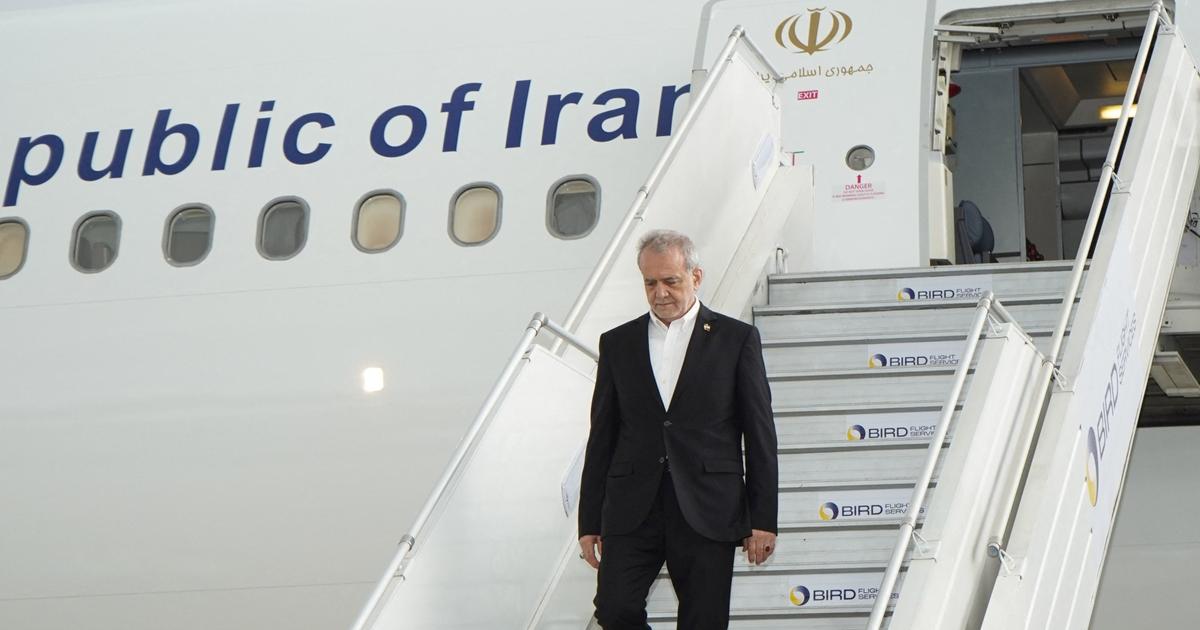 Guerre au Moyen-Orient : le président iranien prévient que les pressions contre l'Iran ont «atteint un stade critique et dangereux»
Open this report in The AI Times →
Read it at Le Figaro →
What we have measured
Asserted, not attributed the capture of the strait and a "lightning offensive" are stated flat, with no source and no date ×1Asserted vs attributed The mayor's account and his opponents' charge are both attributed. ×1Asserted vs attributed The capture of the strait is stated flat, as settled background to a different story, with no source and no date for the claim. ×1Attacker identified by nationality in the headline ×1
Outlet profile in The AI Times →
 Pezeshkian urges BRICS to expand use of national currencies
Open this report in The AI Times →
Read it at IRNA (Islamic Republic News Agency) →
What we have measured
A contested word in the headline "illegal" is a Chinese spokesperson's characterisation, carried unmarked in the headline ×1A contested word taken as the report's own "illegal" appears in the headline without quotation marks or attribution to the speaker ×1Acted upon, never acting police are named as acting; whoever hoarded a billion toman of staples is not named at all ×1Actor label The Houthi-run authority is called Yemen's transport ministry. ×1
Outlet profile in The AI Times →
- 2026-09-1114:14 UTC IRNA publication time IRNA China's foreign ministry says China's president and India's prime minister will meet at the BRICS summit in New DelhiBeijing expects it to help manage "differences"
- 2026-09-1114:15 UTC IRNA publication time IRNA Pezeshkian urges BRICS to expand the use of national currenciesNo warning about pressure in the text we hold
- 2026-09-1114:15 UTC Le Figaro publication time Le Figaro Pezeshkian warns pressure on Iran has reached a "critical and dangerous" stageFive seconds after IRNA's report on the same president
پکن: دیدار رهبران چین و هند به روند عادیسازی روابط دو کشور کمک میکند
Open this report in The AI Times →
Read it at IRNA (Islamic Republic News Agency) →
What we have measured
A contested word in the headline "illegal" is a Chinese spokesperson's characterisation, carried unmarked in the headline ×1A contested word taken as the report's own "illegal" appears in the headline without quotation marks or attribution to the speaker ×1Acted upon, never acting police are named as acting; whoever hoarded a billion toman of staples is not named at all ×1Actor label The Houthi-run authority is called Yemen's transport ministry. ×1
Outlet profile in The AI Times →
Pezeshkian urges BRICS to expand use of national currencies
Open this report in The AI Times →
Read it at IRNA (Islamic Republic News Agency) →
What we have measured
A contested word in the headline "illegal" is a Chinese spokesperson's characterisation, carried unmarked in the headline ×1A contested word taken as the report's own "illegal" appears in the headline without quotation marks or attribution to the speaker ×1Acted upon, never acting police are named as acting; whoever hoarded a billion toman of staples is not named at all ×1Actor label The Houthi-run authority is called Yemen's transport ministry. ×1
Outlet profile in The AI Times →
Le Figaro
Le Figaro
🇫🇷FR ·
newspaper · independent
Guerre au Moyen-Orient : le président iranien prévient que les pressions contre l'Iran ont «atteint un stade critique et dangereux»
Open this report in The AI Times →
Read it at Le Figaro →
What we have measured
Asserted, not attributed the capture of the strait and a "lightning offensive" are stated flat, with no source and no date ×1Asserted vs attributed The mayor's account and his opponents' charge are both attributed. ×1Asserted vs attributed The capture of the strait is stated flat, as settled background to a different story, with no source and no date for the claim. ×1Attacker identified by nationality in the headline ×1
Outlet profile in The AI Times →
One speech, two leads
One report leads on a warning that pressure on Iran is dangerous. Another leads on national currencies and leaves the warning out. Neither says who is applying the pressure.
Le Figaro
Le Figaro
🇫🇷FR ·
newspaper · independent
Guerre au Moyen-Orient : le président iranien prévient que les pressions contre l'Iran ont «atteint un stade critique et dangereux»
Open this report in The AI Times →
Read it at Le Figaro →
What we have measured
Asserted, not attributed the capture of the strait and a "lightning offensive" are stated flat, with no source and no date ×1Asserted vs attributed The mayor's account and his opponents' charge are both attributed. ×1Asserted vs attributed The capture of the strait is stated flat, as settled background to a different story, with no source and no date for the claim. ×1Attacker identified by nationality in the headline ×1
Outlet profile in The AI Times →
Pezeshkian urges BRICS to expand use of national currencies
Open this report in The AI Times →
Read it at IRNA (Islamic Republic News Agency) →
What we have measured
A contested word in the headline "illegal" is a Chinese spokesperson's characterisation, carried unmarked in the headline ×1A contested word taken as the report's own "illegal" appears in the headline without quotation marks or attribution to the speaker ×1Acted upon, never acting police are named as acting; whoever hoarded a billion toman of staples is not named at all ×1Actor label The Houthi-run authority is called Yemen's transport ministry. ×1
Outlet profile in The AI Times →
پکن: دیدار رهبران چین و هند به روند عادیسازی روابط دو کشور کمک میکند
Open this report in The AI Times →
Read it at IRNA (Islamic Republic News Agency) →
What we have measured
A contested word in the headline "illegal" is a Chinese spokesperson's characterisation, carried unmarked in the headline ×1A contested word taken as the report's own "illegal" appears in the headline without quotation marks or attribution to the speaker ×1Acted upon, never acting police are named as acting; whoever hoarded a billion toman of staples is not named at all ×1Actor label The Houthi-run authority is called Yemen's transport ministry. ×1
Outlet profile in The AI Times →
Claims and verdicts
No claims registered.
Who wrote it
Le Figaro
Coverage, outlet by outlet
Le Figaro
Le Figaro
🇫🇷FR ·
newspaper · independent
Guerre au Moyen-Orient : le président iranien prévient que les pressions contre l'Iran ont «atteint un stade critique et dangereux»
Open this report in The AI Times →
Read it at Le Figaro →
What we have measured
Asserted, not attributed the capture of the strait and a "lightning offensive" are stated flat, with no source and no date ×1Asserted vs attributed The mayor's account and his opponents' charge are both attributed. ×1Asserted vs attributed The capture of the strait is stated flat, as settled background to a different story, with no source and no date for the claim. ×1Attacker identified by nationality in the headline ×1
Outlet profile in The AI Times →
— independent
Pezeshkian urges BRICS to expand use of national currencies
Open this report in The AI Times →
Read it at IRNA (Islamic Republic News Agency) →
What we have measured
A contested word in the headline "illegal" is a Chinese spokesperson's characterisation, carried unmarked in the headline ×1A contested word taken as the report's own "illegal" appears in the headline without quotation marks or attribution to the speaker ×1Acted upon, never acting police are named as acting; whoever hoarded a billion toman of staples is not named at all ×1Actor label The Houthi-run authority is called Yemen's transport ministry. ×1
Outlet profile in The AI Times →
— state-controlled
پکن: دیدار رهبران چین و هند به روند عادیسازی روابط دو کشور کمک میکند
Open this report in The AI Times →
Read it at IRNA (Islamic Republic News Agency) →
What we have measured
A contested word in the headline "illegal" is a Chinese spokesperson's characterisation, carried unmarked in the headline ×1A contested word taken as the report's own "illegal" appears in the headline without quotation marks or attribution to the speaker ×1Acted upon, never acting police are named as acting; whoever hoarded a billion toman of staples is not named at all ×1Actor label The Houthi-run authority is called Yemen's transport ministry. ×1
Outlet profile in The AI Times →
— state-controlled International Court of Justice
INT ·
official record · intergovernmental body
What we have measured
Outlet profile in The AI Times →
 International Criminal Court
INT ·
official record · intergovernmental body
What we have measured
Outlet profile in The AI Times →
 UN News
INT ·
official record · intergovernmental body
What we have measured
Actors named Names both vetoing states and the sponsor, and says what the draft would have created ×1Asserted versus attributed share of women and children among the dead given with no source ×1Asserted vs attributed Israel named as acting, stated in the report's own voice ×1Asymmetric verb The Iranian government's crimes are 'confirmed'. The US finding is only 'reasonable grounds'. The two findings are weighted differently in one sentence. ×1
Outlet profile in The AI Times →